Boards Spend Too Much Time Looking at Past Performance
Boards that focus their time on the few issues that could materially impact a company’s value in the future are the most effective boards. These boards are forward looking and usually make decisions during meetings.
By Luciano De Castro Carvalho · Edited by Adrian James, Editor at Featured News · Oct 7, 2026
I have been an advisor or in management roles for 20+ years and have participated in many board meetings. Some meetings accomplished a lot with very little waste. Others were a big waste of time, even though there were lots of good people and valuable information.
One consistent issue comes up often.
There is too much time spent looking at the past.
There are exceptions, but most of the time the meeting starts with management reporting on the prior month or quarter. There is an analysis of revenues, margin, cash, EBITDA (Earnings Before Interest, Taxes, Depreciation, and Amortization), and other measures. Boards look for variances to the budget and management explains the rationale for the changes. Questions are asked, and sometimes Management needs to come back with more information, or details, to answer the questions. Questions that are asked in meetings often cover the same things that are brought up in the previous meeting.
In the best case scenario, and with any luck, the meeting gets to the good stuff in time. Good stuff typically means: strategy, capital allocation, and the hard decisions.
A board should care about and understand how the business makes its money, and then use that information to help the management team make important decisions.
The issue comes up when the board meeting is the first place directors go to find out what has already happened.
When deterioration in a margin calls for an explanation, I expect directors to describe the major reasons. If working capital consumes cash, they should identify the areas of inefficiency. If a major project is behind schedule, the basics should already be known.
Discussion in the board should start from there.
What effect does this change have? Will a decision be required? Has the assumption behind a certain business strategy become weaker? Should capital be allocated to other opportunities? Is the management, taking into account the strategy of the business, acting with enough urgency? Is there still the right leadership in place?
I think this is where board effectiveness begins.
Governance Starts With How the Board Uses Its Time
Discussion about governance usually focuses on committees, controls, approvals and compliance. Of course these are important. However, I think there is another side of governance that is more practical and deserving of focus.
Who determines what is presented to the board?
This is not a secretarial question.
Time is probably the board's most constrained resource. If the board spends three hours explaining the past, it loses the opportunity to debate the future.
It is my experience that packs become huge because each function wants to show its work.
With so much information, a few key decisions probably deserve the full board's attention.
Those decisions should be the priority of the agenda.
Usually, I wouldn’t expect more than 20% of board discussion time to be spent reviewing performance or exception reports, looking backward. This is of course a rule of thumb. With a liquidity crisis, a significant operational problem, or a material transaction, for example, the board would need to spend more time addressing the exception and the strategy for addressing it, and therefore look forward.
But with everyday operations, most of the time should be spent determining what comes next.
Most boards have an oversight responsibility to ensure the organization is adopting the right strategy, making the right decisions about capital allocation, and is properly managing the significant risks the organization is exposed to.
Exceptions are for dealing with the abnormal. Governance is the operating system of an organization, behind the scenes, defining how the organization operates, especially with regard to decision rights.
It is important for board members to maintain a clear line of sight to the strategy of the organization they govern.
An overly bureaucratic process for strategy development leads to inflexibility of a strategy and rusting of assumptions, which ultimately doesn’t serve the organization.
These assumptions are important regardless of the form the ownership of the organization takes (i.e. publicly listed, privately held, family owned, investment company, etc.)
Names may change. A private equity owner may call it an investment thesis. A corporation may call it the strategic plan. I am less concerned about the naming and more about the testing of the underlying assumptions.
A company can achieve its annual EBITDA target and still be making bad decisions for the future.
It can be losing an important customer. It can be postponing maintenance that will create a bigger problem next year. It can be making the profit number for the year by reducing investments that the next stage of growth is dependent on.
The reverse can also be true. A company can miss a target and still be making an investment that is still justified.
Therefore, I don’t think the role of a board is simply to ensure management is aligned to the budget and to grade them against it.
The board also has to read between the lines of the performance.
Have the strategic assumptions on which the business was built and the rationale for investing changed? Which have been validated? Which have been disproved? What was unknown when the strategy was approved and what have we learned?
I think this discussion is more valuable than spending an additional 30 minutes in a board meeting to justify a variance.
Test the Assumptions Behind the Strategy
Ultimately strategy and return on investment are intertwined.
I think one of the most important conversations the board has to continually have is on the trade off between short-term performance and long-term value.
There always has to be a balance between the two.
There may be some correct decisions. Others simply postpone today’s problems for next year.
The opposite is also true.
I’ve seen management use the word strategic to describe almost anything. After that, normal financial discipline sometimes vanishes. Projects become ongoing, and stopping them, despite adverse changes in the economics, sometimes becomes politically untenable.
I try to make the trade-off explicit.
In general, I think of actions in three groups. There are those that improve cash in the near term. There are those that improve competitiveness in the medium term, and enhance optionality and flexibility in the long term.
I’m not looking for an even split among the three.
A company under financial and time-pressure will likely consider the near term and cash the most important consideration. A fast growing company would likely have a stronger focus on capabilities in the medium term. A more mature company may have fewer justifications for funding something with a long time horizon.
What I am concerned with is whether the management and the board truly understand the time horizon they are funding, and why and what they expect in return.
Strategic choices and capital allocation are one and the same.
Capital allocation extends far beyond making a major acquisition or a large, one-time capital expenditure. Day-to-day choices like working capital, selling and purchasing decisions, and funding research and development are all capital allocation choices. Setting payment terms and deciding how to allocate and fund the firm’s real assets are all capital allocation choices. For a board to truly understand the trade-offs the firm is making, it has to be able to understand the choices management is making, and why.
Costly leadership questions happen when boards fail to act.
Another topic boards can sometimes leave unresolved for too long is leadership.
A board has a unique responsibility in this area. It selects the CEO and assesses the CEO and needs to consider succession planning.
What is dangerous is not the board making a decision to change a CEO. What is dangerous is the period before that decision when there is a sense that there is a problem and that something is amiss, but no one is willing to bring that question to the fore.
It becomes a circle that is repeated at each meeting.
I find that if it is a positive thing to make something concrete, then it should also be positive to make something negative concrete.
What is the deficit that people are talking about? Is it execution? Is the CEO unable to build the required management team? Is there a problem in the commercial area? Is the company growing too quickly, or is the organization becoming too complicated? Is there a financial problem?
What is the board looking at? What is the time frame? What is the evidence?
What needs to improve?
What support does the executive need?
What needs to change to demonstrate that the problem has been resolved? When will the board meet to address this?
Challenge your management team, but don't become management.
I've never agreed with the assertion that boards always operate at 30,000 feet.
There are times when you need to be at 500 feet.
Sometimes cash is deteriorating and you need to understand receivables and/or inventory and supplier terms. Sometimes customer retention is down and you need to get beyond the aggregate churn number. Sometimes the plant keeps missing deliveries.
These may not be micromanaging situations.
The line gets crossed when you turn from understanding to instructing.
It's board work to understand why a plant is missing deliveries and to what extent a key account is at risk.
It is not board work to tell the plant manager to run a certain production schedule to ensure deliveries.
The temptation to cross this line is especially acute for board members with significant operating experience, as they are naturally inclined to want to help the company and/or explain what needs to be done.
You may well be able to help.
But being able to help does not mean you should cross the line. The hard challenge should be at the understanding end, not the instructing end. Management needs to be free to manage. Otherwise, you end up with a situation where the CEO is the formal director of the company, but several board members have essentially removed themselves from governance and are micromanaging the CEO. That, also, does not improve accountability.
Challenge Management Without Micromanaging
Work from the work.
As with the composition of the workforce, I prefer to work from the work rather than the résumés when it comes to the composition of the board.
What does this company have to do in the next few years?
If this company has to combine a number of acquisitions, then there needs to be someone on the board to address that. If the company has to go through a commercial reset, there needs to be relevant commercial judgment. If the balance sheet is under pressure, then there needs to be relevant financial judgment to address that.
Not every well-known person is the right director.
The same is true for the non-executive directors. The right board can change over time.
The chairman is particularly important.
The chairman is responsible for making the difficult issues on the board’s agenda discussable. He/she has to make the board work as a team. He/she has to integrate the views of everyone on the board and prevent any one person from dominating and making the board work a solo show.
Sometimes he/she has to tell the directors to keep their hands off management.
I prefer transparency for the people who are directly and extensively working with the company as advisors, partners and former executives.
We have to be clear about the role they are taking.
We have to be clear about whom they are advising. We have to be clear about the decisions they are making. We have to be clear about who is accountable. Otherwise, additional people can add additional ambiguity.
Build the Board Around the Work
I prefer for the work to be done prior to the board meetings.
Much of what determines whether a board meeting will be useful happens before the meeting.
I’d like the fact base clear. I’d like the decision stated. I’d like the alternatives stated.
Management should not use the board meeting to read the board pack to the directors.
In important decisions I like to see a short paper stating the decision, the main alternatives considered, the recommendation, the economic impact of each, the downside risk, and the impact of waiting.
The rest of the analysis can be behind that.
I like to see important decisions early in the board paper agenda.
I am not a fan of saving the most important decision for the last part of a four-hour meeting.
I like to see an in-depth discussion on one or two topics than eight superficial discussions on “strategic” topics.
In ownership structures where there is a number of joint venture interests, I have found pre-briefs very useful. Pre-briefs can help resolve disputes on issues such as the level of funding, the level of risk, control, and even the facts.
A pre-brief should help surface the issues for discussion.
Discussions should help people come to their own conclusion.
Do the Work Before the Board Meeting
Boards should evaluate the value they add.
Which decisions did we improve this year?
Where did we slow the company down?
Which difficult decision did we postpone for too long?
Did management bring us problems early, or only when there was no longer any choice?
Did we continue to provide funding for an initiative after the original case for support started to weaken?
Did we spend time on things in which management should have made the decision for us?
Those questions tell us a lot about board effectiveness. Attendance statistics don’t.
After almost 25 years of working with boards and executive teams, the boards that I value most, are not necessarily the boards with the best-known names or longest meetings.
They create the most clarity.
They understand the company’s history, but they do not get stuck living in the past.
They understand when to challenge, and when to support management.
When a difficult decision is theirs to make, they take action.
The expert featured here is a member of Connectively or HARO, Featured’s expert networks.
About the author
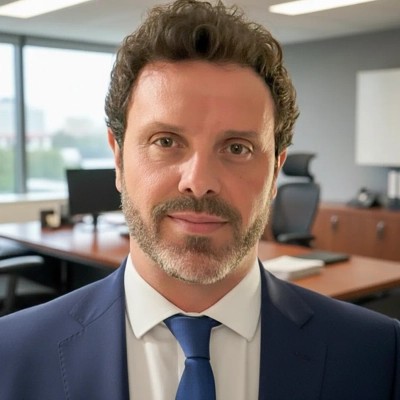
Luciano de Castro Carvalho is a senior transformation and turnaround executive with more than 20 years of experience working with boards and senior leadership teams. He currently leads the Business Transformation practice at Strategy& and has led large-scale transformation programs across more than 30 countries. Previously, he held roles at McKinsey, Alvarez & Marsal, and UBS. lucianodecastrocarvalho.com